
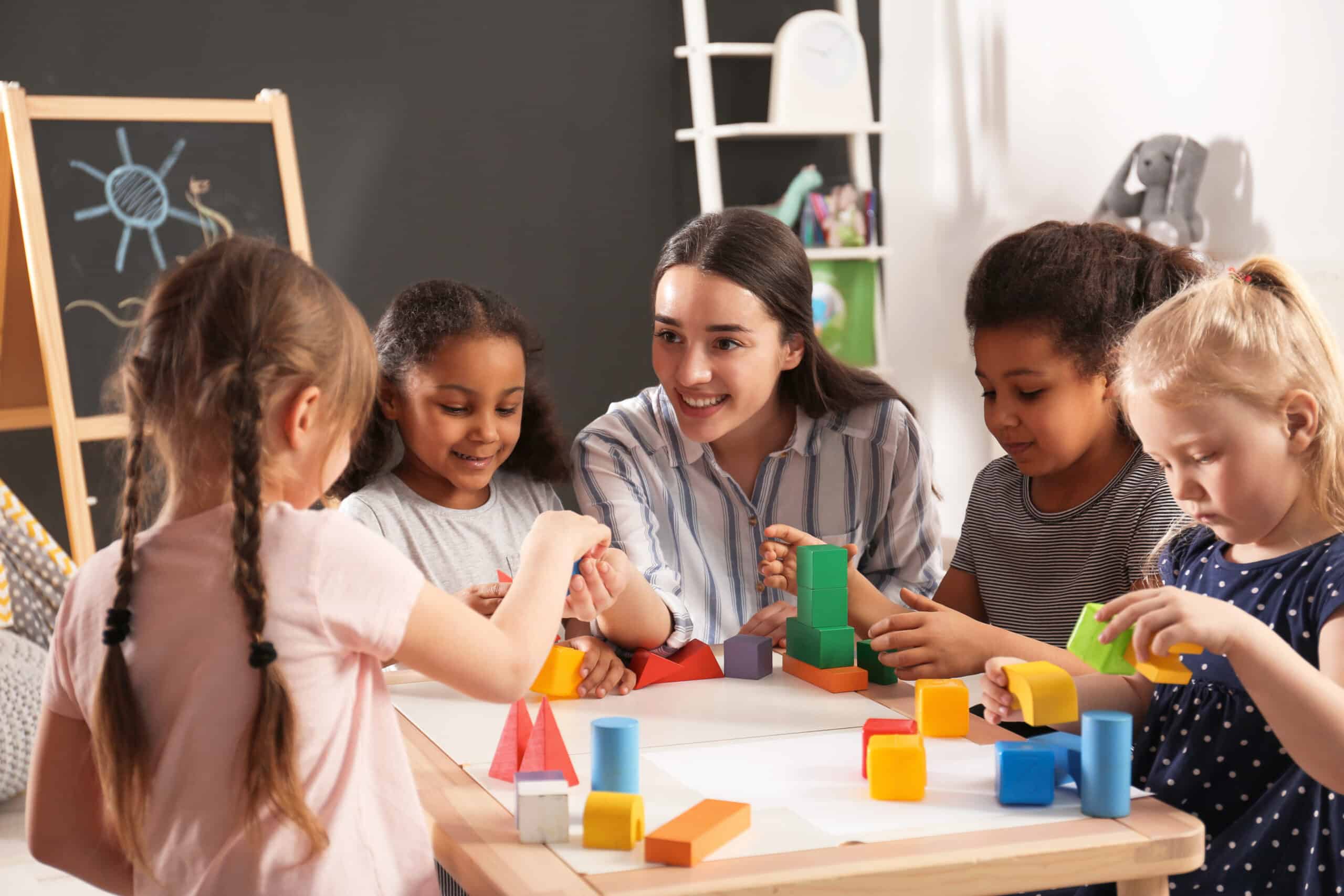
Come on, have you ever failed at play? Failed at joy, laughter, and discovery? There may have been times that ‘play’ felt challenging, risky, and unfamiliar,r but that does not equate to failure. That means learning, uncomfortableness, growth, and problem-solving. Maybe in the moment, it felt like it wasn’t successful, but if we change the narrative and remember that play is learning, then failure is not an option.
The skills, academic, social, emotional, cooperative, language, vocabulary, and executive function, that we learn through play are skills for lifelong success. I am in and out of classrooms all day, every day, supporting teachers with designing play-based experiences that support children academically and socially, and when we pause and notice that play development is on a continuum just like any other learning; then we do not see failure we see growth. We have to notice the successes and differentiate them just as we differentiate and plan for any other academic area. I see children that can take a paper towel roll and tell you in 4 seconds that it can be a microphone, telescope, underwater magnifying glass, and then you have the child that the toilet paper roll is for toilet paper and it never be anything else. Both children are playing, both are showing us their skills in creativity, imagination and cognitive flexibility and both need to be supported in their journey.
Sometimes, a child coming to the rug to play with the block next to a peer, not with the peer, is our WIN! Notice the wins, by child, and then consider the next question to ask, to move them along. The child who uses the toilet paper roll as a magic wand to do tricks could be guided towards considering the language and vocabulary a magician might use. The other child will need assistance to connect to a personal interest and role play.
Just like reading, with phonics development, we meet the child where they are at and move them along the continuum; when play is acknowledged as best instructional practices, we apply the same research-based thinking to supporting child development. Yes, we are talking about toilet paper rolls, but it is not about the rolls, it is about the cognitive flexibility, language development, research, and interactions with others.
Think about the last meeting or even social event you went to; did you have to be flexible, listen to others, share ideas, and use vocabulary appropriate to the topic? Well, that is what we are teaching through play. Hearing educators say they took play away because the child did not know how to play, drives me crazy and makes absolutely no sense. Has any teacher ever, in all of the time, taken a book away because the child did not know how to read? That would be outrageous and frankly, it sounds ridiculous.
So, stop taking play away, because ‘children’ do not know how to do it, but see the successes and move them along because the skills learned through play are the exact attributes we want from adults you interact with at the next party, grocery store, or medical office; patience, listening, critical, and creative thinking.